Optimizing your pumping output
Practical tips for getting the most out of every pumping session.
Staff writer
3 min readNovember 3, 2026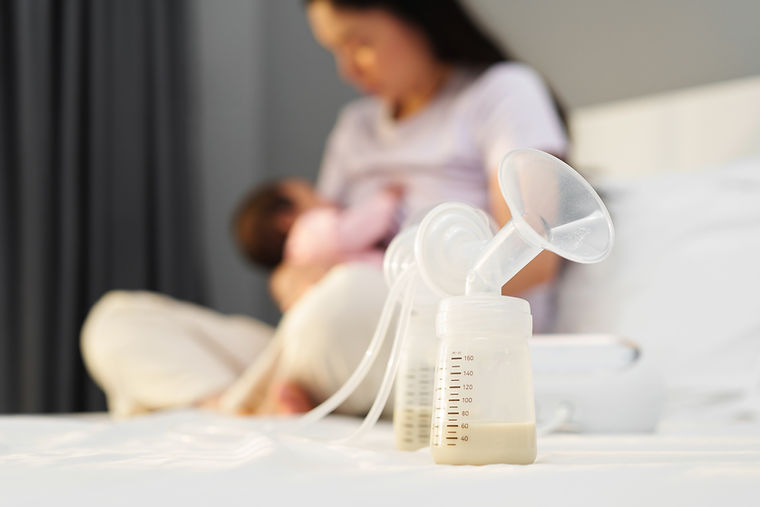
# Optimizing your pumping output
If you've ever stared down at your pump flanges willing more milk to appear, you are far from alone. Pumping is one of the most common sources of anxiety for breastfeeding parents, and it's also one of the most misunderstood. Your pump output is not a referendum on your worth as a parent, nor is it always an accurate measure of your milk supply. It is, however, a skill — one that responds beautifully to the right technique, timing, and equipment. With a few adjustments, most people can meaningfully increase what they're able to express, whether they're building a freezer stash, exclusively pumping, or simply trying to make the most of time away from their baby.
Start with flange fit, not flange assumptions
The single most overlooked variable in pumping output is flange size — the plastic tunnel that fits over your nipple and areola. Most pumps ship with a "standard" size that fits a relatively small percentage of people well. Too tight, and friction restricts milk flow while causing pain and tissue damage. Too loose, and too much areola gets pulled into the tunnel, which can cause rubbing, swelling, and reduced efficiency.
A properly fitting flange allows your nipple to move freely within the tunnel without excessive areolar tissue being drawn in, and without rubbing against the sides. Nipples can swell during a pumping session, so what fits comfortably at the two-minute mark may feel tight by minute ten — this is normal and part of why many lactation consultants recommend sizing slightly larger than you might expect, rather than smaller. If you're consistently seeing low output despite a strong let-down sensation, an ill-fitting flange is one of the first things worth troubleshooting. Many manufacturers now offer sizing kits or guides, and an IBCLC can help you fit properly, especially if you've recently had a baby and your tissue is still changing.
Mimic your baby, not a machine
Hospital-grade and many consumer pumps now offer a two-phase suction pattern: a faster, lighter "let-down" or stimulation phase followed by a slower, deeper "expression" phase. This mimics the way a baby nurses — quick flutter sucks to trigger the milk ejection reflex, followed by slower, more rhythmic draws once milk is flowing.
Resist the urge to crank your pump to the highest suction setting, believing more pressure equals more milk. Past a certain threshold, higher suction doesn't increase output — it just increases discomfort and tissue trauma. The sweet spot is the highest setting that remains comfortable, not painful. Many pumps allow you to manually switch between stimulation and expression modes, or to adjust cycle speed and vacuum strength independently. Spend time learning your particular pump's settings rather than defaulting to whatever it was set to out of the box.
Pumping works best when it cooperates with your body's own reflexes, rather than forcing against them. The goal is to recreate what a baby does instinctively, not to out-muscle your own physiology.
Prime the let-down before you ever attach a flange
Milk ejection, or let-down, is a neurohormonal reflex — it depends on oxytocin, and oxytocin responds beautifully to warmth, relaxation, and sensory cues, and poorly to stress, cold, and clock-watching. Before pumping, consider a few minutes of breast massage or hand expression to get a few drops flowing. Warm compresses, a warm shower beforehand, or simply cupping your breasts with warm hands for a minute can help.
Visual and olfactory cues matter too. Looking at a photo or video of your baby, smelling an item of their clothing, or even just closing your eyes and picturing them can measurably improve let-down speed and milk yield. This is why pumping in a stressful environment — rushing on a work break, pumping in a car, watching the clock — so often yields less than pumping at home in a calm setting. If your circumstances require pumping somewhere imperfect, building in even sixty seconds of intentional calming ritual beforehand can make a real difference.
Hands-on pumping — massaging and compressing the breast while the pump is actively running — has also been shown in research to increase both the volume and fat content of expressed milk, particularly in the later, calorie-rich part of a session. Try compressing firmly but gently in a rolling motion from the outer breast toward the nipple whenever flow slows, rather than simply waiting out the session.
Protect frequency and consistency, not just duration
It's tempting to think of pumping output purely in terms of session length, but frequency and consistency matter just as much, if not more. Milk supply operates on a demand-driven feedback loop: the more consistently and completely milk is removed, the more your body is signaled to produce. Skipping sessions, going long stretches engorged, or varying your schedule wildly sends inconsistent signals.
For most people building or maintaining supply through pumping, eight to ten milk removals in 24 hours (including direct breastfeeding, if applicable) is a reasonable target in the early weeks, tapering as supply establishes. If you're exclusively pumping, spacing sessions roughly every three hours, including at least one overnight, tends to protect supply better than clustering sessions during the day and skipping nights.
Session length matters less than most people assume once flow has slowed to a trickle. Continuing to pump dry breasts for an additional five to ten minutes after active flow stops — sometimes called "finishing" the breast — can help capture that hindmilk and also sends a stronger supply signal than stopping the moment flow slows.
Double pump when you can
Pumping both breasts simultaneously rather than sequentially has a real, measurable advantage: research suggests it not only saves time but also tends to yield more total milk and higher prolactin levels than single pumping, likely because of the stronger, more comprehensive hormonal signal sent to the body. If your pump and circumstances allow for it, double pumping is generally the more efficient and productive choice.
That said, some people find that switching between breasts — pumping one side for a few minutes, then the other, back and forth — helps restart flow when output slows on both sides. This technique, sometimes called "switch pumping," can be a useful tool layered on top of double pumping, particularly for those with lower supply or for exclusive pumpers looking to maximize every session.
Know when output naturally plateaus or dips — and why that's not a crisis
It's worth naming something that often goes unspoken: pump output is an imperfect proxy for milk supply, and it's normal for it to fluctuate. Stress, dehydration, illness, certain medications, hormonal shifts, and even the brand or age of your pump's membranes and valves can all affect what you're able to express, even when your baby is nursing well and gaining appropriately.
Pump parts wear out. Membranes, in particular, lose their seal over time and can quietly tank your output without any obvious sign of malfunction — most manufacturers recommend replacing them every one to three months with regular use. If your once-reliable pump suddenly seems less effective, worn parts are often the simple, fixable culprit before you assume something is wrong with your supply.
It's also worth remembering that babies are, in general, more efficient at removing milk than even the best pump. If you're nursing your baby directly and only pumping occasionally, lower pump output doesn't necessarily reflect low supply — it may simply reflect that your baby is better at the job than any machine.
When to call for help
If you're pumping consistently and seeing a sudden, sustained drop in output; if pumping is painful despite correct flange sizing; if your nipples show signs of damage, blanching, or unusual pain between sessions; or if you're concerned about your baby's weight gain or intake regardless of what the pump shows — these are all good reasons to reach out to an IBCLC. A lactation consultant can assess flange fit, pump function, technique, and your overall feeding picture far more precisely than troubleshooting alone, and can help distinguish between a pumping problem and a genuine supply concern. You don't need to wait for a crisis to ask for support — a single consult can often resolve what feels, in the moment, unsolvable.
Staff writer
Editorial Team