Encouraging early development
Nurturing your baby's development is less about specific toys and more about responsive, warm interactions.
Staff writer
3 min readDecember 9, 2026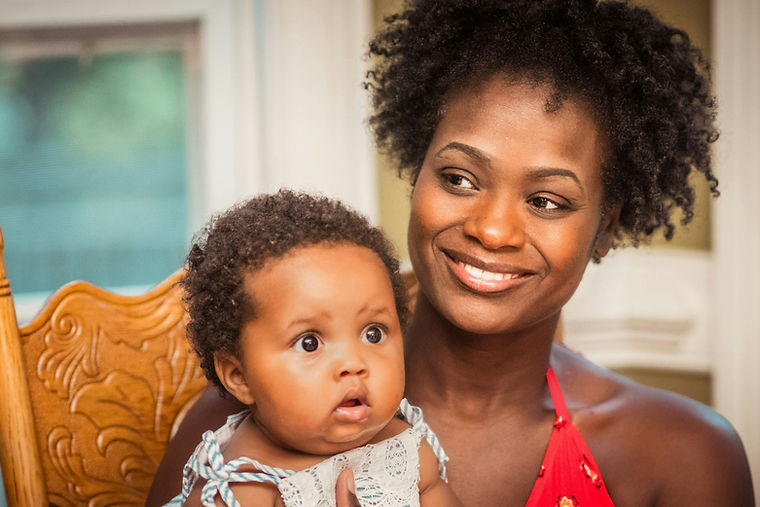
Somewhere between the swaddle blankets and the stroller reviews, a quiet myth has taken hold: that early development is something you purchase. Flashcards, light-up toys, "brain-building" mobiles — the marketing suggests that a baby's mind grows in proportion to the gadgets around her. But decades of developmental research, and the lived experience of lactation consultants and pediatric therapists alike, point to something simpler and far more accessible. Babies develop best in the context of warm, responsive relationships. The most powerful developmental tool in your home isn't on a shelf. It's your face, your voice, and your willingness to notice what your baby is telling you.
The foundation: connection before curriculum
In the first months of life, a baby's brain is forming roughly a million new neural connections every second. What shapes which connections strengthen and which fade away is repetition — specifically, the repeated experience of a need arising and being met. Cry, and someone comes. Fuss, and someone shifts position. Coo, and someone coos back. This is not indulgence; it's architecture. Each responsive exchange tells a developing nervous system that the world is safe and predictable, which in turn frees up cognitive and emotional resources for exploration and learning.
Researchers call this "contingent responsiveness" — your response is contingent on, or connected to, your baby's signal. It's the back-and-forth that matters more than any single toy or flashcard. A baby who babbles and is babbled back to is practicing the earliest form of conversation, long before actual words arrive.
Tuning in: reading your baby's cues
Responsive care starts with observation. Babies communicate constantly, just not in words. A turned head, a stiffened body, a soft coo, a wide-eyed stare — these are all data points. Learning your particular baby's vocabulary of cues takes time, and there's no shortcut except attention.
Some useful categories to watch for:
- **Engagement cues**: steady eye contact, relaxed limbs, reaching toward you, rhythmic sucking at rest. - **Disengagement cues**: looking away, arching the back, splayed fingers, yawning, hiccupping.
Neither set is a problem to fix. Disengagement cues simply mean your baby needs a pause — a moment to process the stimulation already received before taking in more. Pushing through these signals with more noise, more movement, or more toys doesn't accelerate development; it can actually overwhelm a still-maturing nervous system. The skill isn't in doing more, but in matching your input to what your baby can currently handle.
The most powerful developmental tool in your home isn't on a shelf. It's your face, your voice, and your willingness to notice what your baby is telling you.
Talking, singing, and the power of your voice
Long before a baby understands words, she is absorbing the music of language — its rhythm, pitch, and pattern. This is why "parentese," that slightly higher-pitched, slower, melodic way many adults instinctively speak to infants, isn't silly. It's linguistically useful. Studies on infant language acquisition have found that babies exposed to more parentese, and more direct conversational turns with caregivers, tend to develop stronger vocabularies later on — not because of vocabulary drills, but because the exaggerated, warm cadence helps infants distinguish speech sounds.
You don't need a script. Narrating ordinary moments works: describing the water temperature during a bath, naming the burp cloth as you reach for it, telling your baby what's for dinner as you stir the pot with her on your hip. Singing counts too, even off-key, even the same three lullabies on repeat. What matters is the real-time, responsive quality of it — speaking with your baby, pausing as if awaiting a reply, reacting to her sounds as though they were sentences. This "serve and return" pattern, as some child development researchers describe it, is one of the most well-supported early interventions for language and cognitive growth, and it costs nothing.
Movement, touch, and the quiet engine of growth
Physical development and cognitive development are more intertwined than most new parents expect. Tummy time, often framed as a chore to check off, is really an invitation for a baby to practice lifting her head, pushing up on forearms, and eventually reaching — all of which build the strength and coordination needed for sitting, crawling, and later fine motor skills like grasping a spoon or a crayon.
Touch itself carries developmental weight. Skin-to-skin contact, babywearing, gentle massage — these aren't just bonding rituals, they're regulatory tools. Touch has measurable effects on a baby's stress hormones, heart rate variability, and sleep organization. A calmer physiological state is a better launching pad for alertness and learning. In this sense, the hours you spend holding, rocking, and carrying your baby are not time away from "developmental activities." They are the activity.
Floor time without a container — no bouncer, no swing, no car seat — gives babies the freest range to experiment with their own bodies. A few minutes of unstructured floor time daily, increasing as your baby gains head and trunk control, does more for gross motor development than almost any purchasable product.
Feeding as a developmental moment
For families who are nursing, chestfeeding, or bottle-feeding, feeding time offers a built-in, repeated opportunity for connection that's easy to overlook as "development." The skin contact, the eye gaze, the pauses where a baby disengages from the breast or bottle to study your face — these micro-interactions, repeated many times a day, are some of the richest responsive exchanges a baby has.
If latch, positioning, or flow make feeds stressful rather than connective, it's worth addressing with a lactation consultant — not only for comfort and milk transfer, but because a baby who is working hard or frustrated at the breast or bottle has less bandwidth left for the social, exploratory parts of feeding. Getting feeding mechanics right can free up a surprising amount of relational space.
Screens, stimulation, and the myth of more
It's worth naming directly: the American Academy of Pediatrics recommends no screen time for babies under 18 months, aside from video chatting with family. This isn't about screens being inherently dangerous, but about displacement — screen time in infancy tends to replace the live, responsive interactions that actually drive development, and infants under a year generally can't extract meaning from two-dimensional, non-contingent images the way older children can.
The deeper principle here applies beyond screens: more stimulation is not automatically better. Overstimulated babies show the same disengagement cues mentioned earlier — looking away, fussing, arching. Development isn't accelerated by constant input. It's built in the pauses, in the quiet stretches where a baby gets to process what she's just experienced, in simple repeated rituals rather than a rotating cast of novel toys. A cardboard box, a wooden spoon, your own cupped hands clapping a rhythm — these often hold a baby's attention longer than anything battery-powered, precisely because they invite interaction rather than passive watching.
When to call for help
Trust your instincts, but don't carry concerns alone. If your baby isn't making eye contact by two to three months, isn't responding to sounds or your voice, shows significant stiffness or floppiness, or seems to lose skills she previously had, bring this to your pediatrician without delay — early intervention services are most effective when started early, and there is no downside to asking. If feeding difficulties are making it hard to find calm, connected moments together, a lactation consultant can help troubleshoot latch, positioning, or flow so that feeding becomes the rich developmental exchange it's meant to be. And if you're feeling persistently overwhelmed, anxious, or disconnected from your baby, please talk to your care provider — your own wellbeing is not separate from your baby's development. It is, in fact, central to it.
Staff writer
Editorial Team