Three Burping Positions for a Newborn
Effective burping is a skill that can significantly reduce gas discomfort and help your baby feed more comfortably.
Staff writer
3 min read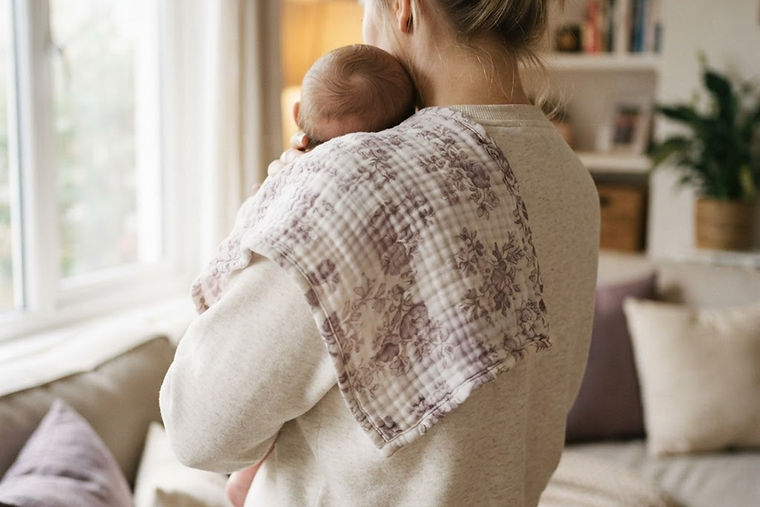
For many parents, the post-feeding burp feels like a complex puzzle that needs to be solved. Newborns take in a fair amount of air while feeding, whether they are breastfeeding or taking a bottle, and this air needs to find its way out to prevent discomfort. If you have ever wondered why your baby is wiggling or crying shortly after a meal, there is a good chance they are dealing with a trapped air bubble. Learning a few different burping positions allows you to find what works best for your baby's body and your own physical comfort during those late-night feeds.
The Classic Upright Method
The most common way to burp a newborn is the over-the-shoulder position. Place a clean cloth over your shoulder to protect your clothes and hold your baby in an upright position against your chest. Use one hand to support their head and neck, and use your other hand to pat or rub their back in an upward motion. The upright posture uses gravity to help the air bubble rise, while your gentle rhythmic pressure encourages the release. This is often the most soothing position for babies because they are pressed against your heartbeat, which provides them with a sense of security.
Sitting and Lying Positions
If the over-the-shoulder method is not producing results, try sitting your baby on your lap. Support their chest with one hand and cradle their chin in your palm, ensuring you are not putting pressure on their throat. Lean them slightly forward and use your other hand to pat their back. Another effective technique is laying your baby across your lap on their stomach. This position provides gentle pressure on their abdomen, which can help move gas through their system. Support their head and ensure it is slightly higher than the rest of their body to keep them safe and comfortable while you pat their back.
Patience is the most important ingredient when it comes to burping, as every baby needs their own time to release that trapped air.
When to Keep Trying
Do not worry if you do not get a burp every single time. Some babies are more efficient at feeding than others and take in less air. If you have tried several positions for ten minutes and there is no result, it is likely that your baby simply does not need to burp at that moment. Lay them down on their back and monitor them for signs of discomfort. If they seem content, you are done for now. Mastering these positions takes practice, and soon it will become an intuitive part of your feeding routine, helping your little one stay calm and comfortable.
Staff writer
Editorial Team